Wednesday, October 5, 2011

From Abu Ghraib to Loome Theological Booksellers


Mother Olga of the Eucharist came into the store while she was in the Twin Cities to give a retreat as part of the First Saturday Series at the Cathedral of St. Paul.

Mother remarked upon the antique depictions of the sacraments that are permanently on display in the store and was particularly impressed by the large collection of St. Therese items for sale in the Sacred Gifts section. Learn more about this remarkable woman’s life here.


Share |

Wednesday, September 7, 2011

Why buy a $245 Summa when you can get it for 99 cents on a Kindle?


For some time to come Loome Theological Booksellers is committed to reminding discerning readers of the many advantages that physical books have over eBooks.  eBooks get most of the good press these days (and occasionally bad press) and since the format is still new and only available on status enhancing devices, the momentum of many readers is to embrace them.  Loome Theological Booksellers is not against eBooks as much as we are FOR physical books.

Today's discussion is provoked by the suggestion here that it is better to obtain your Summa for 99 cents in the electronic format rather than for $245 in the thick five volume hardcover format.  The matter is a question of what will a physical Summa do that an electronic Summa can't.


A physical Summa will:

  • Have a physical presence on a shelf (preferably) the effects of which are varied and beneficial:
    • Raise the heart and mind to God:
      • in thanksgiving for Aquinas
      • in humility for understanding of the Summa
      • in supplication for quiet time to read and study the Summa
      • in fervor to live a life of virtue
    • Insulation - a wall of books (of which the Summa would provide a substantial part) keeps in the heat and out the cold.  We know this well from years of winters in our unheated "Great Room" at the bookstore.
    • Call to knowledge - objects that are large and heavy draw our attention.  The physical Summa draws to the intellectual life by it's quiet substantial presence.
  • Endure.  A physical Summa, because it endures, can be loaned out to . . . well, others you might know who would read the Summa.  It can be borrowed.  It can also be passed on after death.  It lasts longer than it's original owner.  It can go to Christians in Africa where there aren't eReaders.  It can be smuggled into underground seminaries.  The physical Summa has freedom, the eBook Summa is chained to an eReader.
Are these attributes of a physical Summa worth $244.01?  Can our blog readers think of any more advantages to the physical Summa?

Physical books endure - that is their value.


Share |

Wednesday, August 31, 2011

What to Read on Vacation: A Pope's Thoughts


When the Pope comments on anything to do with reading we pay attention at Loome Theological Booksellers.  Lately the Pope spoke on vacation reading and since this weekend (at least in the States) is the last vacation weekend before the end of Summer, we thought some others would like to know what the Pope recommends for vacation reading.

He simply recommends reading the Bible.

Actually he recommends reading one of the books of the Bible straight through on vacation.

Selkirk was on a bit of an extended vacation at the time . . .

I find his recommendation a bit challenging.  When I go on vacation I want to read light reading; one of those books with chapter breaks every 8 pages; a book that doesn't require a dictionary for full enjoyment and understanding.  The Bible is hardly light reading.  However, I understand the Pope's point and I respect it.  He wants us to discover the Bible in a way we haven't before by reading one of its books straight through.  Vacations provide the time do so.  This would make vacations not simply relaxing and diverting but also an opportunity to "deepen our contact with the Eternal One".  Perhaps that's worth the challenge.

Share |

Wednesday, August 17, 2011

4 Steps to Spiritual Reading


I tend to view spiritual books as the opportunity learn wisdom, beauty, and holiness at the feet of remarkable authors past and present.  One such author is Jean Pierre de Caussade, S.J.


"Now that you are less busied with others, spend more time in nourishing your soul with good reading.  To make this nourishment the more beneficial, let this be your method of taking it.  [1.] Begin by entering the presence of God and by begging his help.  [2.] Read softly and slowly, a word at a time, that you may interpret your subject with your soul rather than with your intelligence.  [3.] At the end of each paragraph containing a finished thought, pause for as long as it would take you to say an Our Father, or for even a little longer, to appreciate what you have read or to rest yourself and to gain interior tranquility before God.  Should this rest and tranquility last longer, so much the better; but when you notice that your attention is wandering, [4.] go back to your reading, constantly making similar pauses as you continue" (DE CAUSSADE, J.P., S.J. Self-Abandonment to Divine Providence. page 191).


It's not about how many books you read or even which ones you read.  It's about how well you read.  This is why I often say to our patrons, as I hand them their books from behind the checkout counter, "read well".

Share |

Wednesday, July 20, 2011

Code of Catholic Modesty - No Slacks!


It's hard to imagine just exactly how this bibliosite was used before it became a bibliosite:


Was this a notice that the usher would slip into your hand during the offertory?  Did this arrive in your mailbox after Sunday?  Would it turn up in your sock drawer?

And just who did the noticing in the first place?  Where can one find the "Code of Catholic Modesty or Improper Dress"?

"And you're ugly" - was this written as an extra barb or in retaliation towards the person who originally gave notice.  We may never know.

One thing I do appreciate about this card is that it clearly lays out measurable modesty standards.  Everybody knows that it is important to be modest, but I rarely if ever hear of clearly modest standards.  This card has them (guess I better button up my shirt in church now!).

Please feel free to print out copies of this card for use as you see fit.  Just how would YOU use such cards?

Share |

Wednesday, July 13, 2011

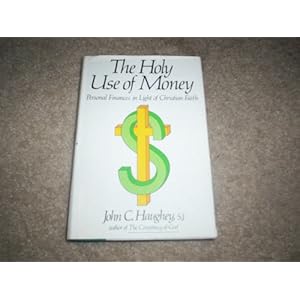
Heresy Watch: The Holy Use of Money by Haughey, S.J.


From time to time we offer for sale heretical books, sometimes knowingly (one must read Kung to critique Kung) and sometimes unknowingly.  The present title under discussion is a book that we had for sale in our Marriage and Family Life section.  One of my co-workers happened to be reading on the job one day and spotted the heresy in the Introduction of the book.  This was a heretical book that we were unknowingly offering for sale.
The book is The Holy Use of Money, Personal Finance in Light of Christian Faith by John C. Haughey, S.J.  The book was published by Doubleday in 1986.  Please see if you can spot the heresy:

"Transubstantiation is a metaphor.  In the case of the Eucharist, the bread and wine do not physically become Christ.  They remain bread and wine while they mediate the real presence of Christ to us.  He really becomes food and drink for us but we don't drink and eat the Son of God.  What we drink and eat mediates him to us.  The marvel in this is not the change that comes over the bread and wine but the change that comes over a people God chooses to be his own when they choose to exercise the faith with which God has embued them.  The Eucharist cannot be explained except that the believers believe bread and wine into being what Christ wills it to be for them.  He wills it to be him for them.  But he's not confined only to this mode of being present to them.  More than bread and wine should mediate him to us.  Money can and should, which is one reason for [this book]" pages vii-viii.

Did you spot it?

Share |

Wednesday, July 6, 2011

The Father of the Catholic Lifetime Reading Plan


When I first started working at Loome Theological Booksellers there were two books Henry Stachyra gave me to read in order to become as Loomish as possible.  One was Pieper's Liesure the basis of Culture and the other was Fr. John Hardon's Catholic Lifetime Reading Plan.  I thought I was a well read person before I started working at the bookstore.  After leafing through the Catholic Lifetime Reading Plan and seeing page after page of authors I had never even heard of, let alone read, I found out I was woefully under-read, at least in the intellectual tradition that mattered at Loome Theological Booksellers.

Happily I later found that Fr. Hardon was a rather holy and intellectual priest leaving behind many good books. I have particularly benefited from his Modern Catholic Dictionary actually.  I recently met the postulator for his cause for sainthood, Fr. Robert McDermott (see him below).


Fr. McDermott visited the bookstore recently and he was after Fr. Hardon's books.  Happily we were able to show him a rare Hardon book on confession.  Fr. McDermott's visit prompted me to reflect once again on the worth of a good book and in particular, the many good books of Fr. Hardon.

Please learn more about Fr. Hardon and his cause for sainthood here.

What books of Fr. Hardon have you benefited from?

Share |